 Web HostingMost affordable shared hosting from TZS 9,100 per year
 Dedicated ServersExperience unmatched power and control with a physical server in Tanzania.
 WordPress HostingHigh-Speed, Tanzania-Optimized WordPress Hosting
 Windows HostingOptimized for Windows-based applications and websites
 cPanel HostingUser-friendly hosting powered by cPanel
 Email HostingProfessional Tanzanian email hosting for your .co.tz domain (Secure, reliable, and Swahili-supported)
 Reseller HostingLaunch your own hosting business with minimal technical requirements
 Affiliate ProgramEarn referral commissions by promoting our services
 DomainsFind and register available domain names in seconds
 Domain TransferMove your domain to us with zero downtime and full control
 .co.tzSecure the trusted .co.tz domain made for Tanzanian businesses.
 .tz DomainClaim the official .tz domain for national trust and recognition.
 .com DomainSecure the trusted .com domain for Tanzanian businesses.
 Supported Tlds (glTLDs and ccTLDs)Browse and register domain extensions from around the world
 Whois Lookup | Find Out Who Owns a DomainLook up domain ownership, expiry dates, and registrar information
 VPS
VPS VPS Hosting TanzaniaDedicated resources. Tanzanian performance. Full server control.
 Managed VPS TanzaniaNot a tech expert? Choose a managed Tanzania VPS.
 Website BuilderEasily build beautiful websites with drag-and-drop simplicity.
 Online ShopLaunch a professional e-commerce store without writing code.
 BlogFind latest business, marketing, and tutorials
The window for entering ecommerce business in Tanzania with low competition and high upside is real. It is also narrowing.
The sellers who move now will own the niches that become expensive to enter in two years.
Unlike most guides, which focus on the Western markets, this one addresses the Tanzanian market directly.
This guide walks you through what actually works. From legal registration to mobile payments to last-mile delivery.
By the end, you will have a clear roadmap for launching a store that Tanzanian customers will trust and use.
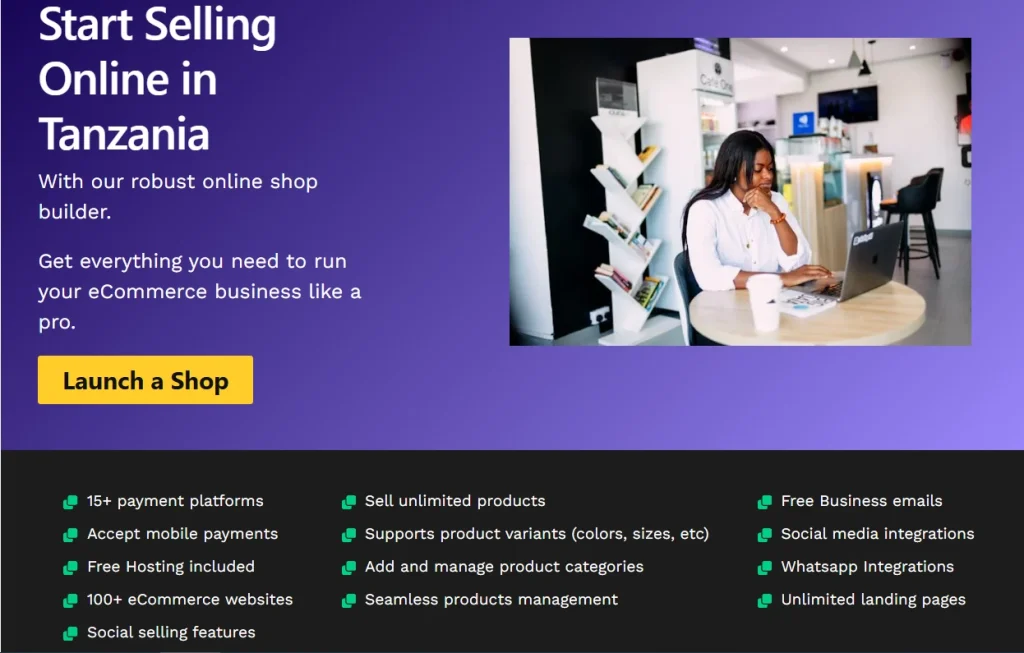
Step 1: Choose Your Model for Ecommerce Business in Tanzania
Before you spend a single shilling on tools or inventory, you need to decide on your model. You have two main paths to pick from.
The first path is selling on an existing marketplace. Jiji Tanzania, Duka, and Facebook Marketplace all give you an existing audience.
The advantage is speed. You can list products and start selling within days. There is minimal technical setup involved.
The trade-off is real, though. Jiji charges commissions between 10% and 20% per sale, depending on the product category.
You also have limited control over branding, customer data, and the overall buying experience. You are renting space in someone else’s store.
The second path is building your own store on WooCommerce, Shopify, or a platform like Zegashop.
A self-hosted WooCommerce store can cost between TZS 300,000 and 1,500,000 to set up properly. Monthly hosting runs TZS 15,000 to 50,000.
The upfront cost is higher, but you own the brand, the customer relationships, and the margins.
The smartest move for a new seller is a hybrid approach. Start on Jiji or Facebook to validate demand and gather reviews.
Once you have consistent sales, start migrating repeat buyers to your own store. That move alone can significantly improve your net margins over time.
Product Categories With Real Demand in Tanzania
Electronics and clothing are the two most active ecommerce categories in Tanzania. However, both are also the most competitive.
If you enter electronics without a niche angle, you are fighting well-funded sellers with established supply chains. That is a hard battle to start with.
Less competitive niches worth exploring include agri-tech tools, home improvement products, and locally made artisan crafts.
Alibaba, Aliexpress, and similar Chinese platforms allow direct importing with some lead time planning.
Minimum order quantities can be negotiated down for testing purposes.
You can also opt for dropshipping. This lets you sell without holding any inventory at all.
It reduces your startup risk significantly when you are still figuring out which products move.
Step 2: Register Your Business Legally in Tanzania
Operating an online store without proper registration puts your business at real legal risk. The good news is that registration is now done entirely online.
The Business Registration and Licensing Agency, BRELA, manages all business name and company registrations in the country.
Start by visiting ors.brela.go.tz and creating a user account. Once logged in, run a name availability search before submitting anything.
Business name registration typically processes within 2 to 5 business days. Full limited company incorporation takes longer and involves more forms.
ICT and Tax Compliance for Online Businesses
If your business offers digital services or ecommerce transactions, you also fall under the TCRA’s oversight.
The Tanzania Communications Regulatory Authority regulates all digital and ICT business activity in the country. Staying compliant keeps your operations clean.
Brand protection is another legal move worth making early. You can register trademarks and logos through BRELA’s Intellectual Property Department.
Step 3: Pick the Right Platform for the Tanzanian Market

Platform selection comes down to four things that matter specifically for the Tanzanian market.
- Mobile responsiveness out of the box
- Support for local payment gateways like M-Pesa, Selcom, and ClickPesa
- Swahili language compatibility
- Total cost in Tanzanian shillings
WooCommerce running on WordPress is the most flexible and cost-effective starting point for most Tanzanian sellers.
You can add a free Swahili language plugin directly from the WordPress plugin library. Pair it with a Tanzanian hosting provider like Truehost for the best local performance.
Swahili-language product pages reach a huge segment of potential buyers who search only in Swahili. Most competing stores do not bother with this, which makes it a genuine edge.
Mobile-First Design Is Not Optional

Mobile ecommerce in Tanzania is already dominant, and its lead over desktop is widening every year.
If your store loads slowly or looks broken on a cheap Android phone, you are already losing buyers before they even see your products.
Target a page load time of under 3 seconds on a standard 3G mobile connection. Use Google Lighthouse to measure this and improve it regularly.
Compress all product images before uploading them. High-resolution photos that are not compressed kill mobile load speeds.
Keep checkout steps to a minimum. Every additional step between adding to the cart and confirming payment costs you conversions.
Step 4: Sort Out Shipping and Last-Mile Delivery
Logistics can quietly destroy an ecommerce business even when everything else is working well. Getting delivery right early prevents a flood of complaints later.
For deliveries within Dar es Salaam, you have several options to work with. Each comes with its own trade-offs.
Sendy offers on-demand delivery with real-time tracking through its app. It has become popular with Tanzanian online sellers for its reliability within the city.
G4S Courier provides a more structured service level for both documents and parcels. It works well for sellers who need consistency over speed.
Informal boda-boda delivery networks are the fastest option for same-day delivery within short distances. Many small sellers in Dar es Salaam use these for quick local orders.
Upcountry and Rural Delivery
Reliable courier coverage drops sharply once you move outside Dar es Salaam, Arusha, and Mwanza. This is a real challenge, and pretending otherwise does not help anyone.
Being upfront about your delivery coverage on your website actually builds more trust than trying to hide limitations.
A practical solution for reaching smaller towns and rural areas is a hub-and-pickup model. Partner with local shops, mobile money agents, or petrol stations in those areas.
Step 5: Drive Traffic to Your Store
For most Tanzanian ecommerce businesses, social media is where the traffic actually lives. Facebook dominates the space by a wide margin.
Facebook has over 5 million active users in Tanzania, making it the top social platform for product discovery and direct sales.
Instagram and TikTok are growing quickly among younger users. However, Facebook still leads for direct buying behavior in the current market.
The funnel that consistently works in Tanzania looks like this:
- Post clear product photos with prices on your Facebook Business Page
- Interested buyers message you through WhatsApp Business
- You close the sale through chat and arrange the preferred payment method
- Deliver via your chosen courier or offer cash on delivery
SEO for Tanzanian Search Traffic
Social commerce brings fast traffic. Free search traffic from Google, on the other hand, builds reliable, long-term growth.
Getting your store ranked in Tanzanian search results takes consistent work, but it pays off in compounding organic traffic.
Start by registering your store on Google Business Profile. This places your business in local search results and Google Maps without any ad spend.
Use both English and Swahili versions of your product names in your title tags and meta descriptions.
Consistent SEO work compounds. A store that invests in it for 6 months will have traffic sources that a paid-ads-only competitor can never easily replicate.
Frequently Asked Questions
What Are the Legal Requirements to Start an Ecommerce Business in Tanzania?
There are four main requirements to operate legally. Register your business name or company with BRELA via ors.brela.go.tz.
Get a free Tax Identification Number from the Tanzania Revenue Authority.
Obtain a business license from the relevant authority for your industry.
Comply with TCRA regulations if your business offers digital or ecommerce services.
Which Payment Gateway Works Best for Online Stores in Tanzania?
For new stores, ClickPesa or Selcom are the most practical starting points. Both aggregate mobile money and card payments through a single API.
For stores targeting international customers, DPO Group and Pesapal offer broader support with USD settlement options.
How Much Does It Cost to Start an Online Business in Tanzania?
A basic functional store can go live for between TZS 1.5 million and 3 million all-in.
This covers BRELA registration, domain, hosting, payment setup, and initial inventory. Starting with the micro-store model costs less upfront but gives you less control over the long run.
Is Ecommerce Profitable in Tanzania Right Now?
Yes, provided you choose the right niche and execute with a mobile-first approach. The market data for 2024 is genuinely encouraging.
Merchant adoption grew by over 100% in a single year. Mobile payment volumes are rising every quarter. Competition in most niches remains relatively low.
Conclusion
Tanzania’s ecommerce market is still in the early stages of development. This is exactly the right time to build.
The sellers who figure out mobile-first design, local payment integration, and social commerce now will have a significant lead over those who enter later.
Your store needs hosting that actually works in Tanzania. Fast servers and Swahili support. Get your store online with Truehost today.