 Web HostingMost affordable shared hosting from TZS 9,100 per year
 Dedicated ServersExperience unmatched power and control with a physical server in Tanzania.
 WordPress HostingHigh-Speed, Tanzania-Optimized WordPress Hosting
 Windows HostingOptimized for Windows-based applications and websites
 cPanel HostingUser-friendly hosting powered by cPanel
 Email HostingProfessional Tanzanian email hosting for your .co.tz domain (Secure, reliable, and Swahili-supported)
 Reseller HostingLaunch your own hosting business with minimal technical requirements
 Affiliate ProgramEarn referral commissions by promoting our services
 DomainsFind and register available domain names in seconds
 Domain TransferMove your domain to us with zero downtime and full control
 .co.tzSecure the trusted .co.tz domain made for Tanzanian businesses.
 .tz DomainClaim the official .tz domain for national trust and recognition.
 .com DomainSecure the trusted .com domain for Tanzanian businesses.
 Supported Tlds (glTLDs and ccTLDs)Browse and register domain extensions from around the world
 Whois Lookup | Find Out Who Owns a DomainLook up domain ownership, expiry dates, and registrar information
 VPS
VPS VPS Hosting TanzaniaDedicated resources. Tanzanian performance. Full server control.
 Managed VPS TanzaniaNot a tech expert? Choose a managed Tanzania VPS.
 Website BuilderEasily build beautiful websites with drag-and-drop simplicity.
 Online ShopLaunch a professional e-commerce store without writing code.
 BlogFind latest business, marketing, and tutorials
 Contact UsContact Truehost TZ | 24/7 Web Hosting Support
Your website isn’t just another page on the internet but your business front door. But what happens when that door suddenly jams because your hosting can’t keep up? Or when your bill doubles overnight because you chose a plan you barely understand?
These are real struggles for many people deciding between web hosting and cloud hosting. The two sound similar, yet they work very differently and can hugely affect how fast, secure, and reliable your website becomes.
In this guide, you’ll learn what each option really means, the differences, and how to pick the one that fits your needs. Keep reading!
What is Web Hosting?

Web hosting is the service that keeps your website reachable on the internet.
Picture this! When you build a site you create files such as text, images, code, and sometimes databases. Now, for these files to show on the internet as your website, you need a space to store them and mechanisms to display them to people when they search your domain name, hence that’s web hosting.
Usually, you can get various web hosting service plans from different web host companies in Tanzania. For example, Truehost offers shared hosting, VPS hosting, dedicated hosting, Windows hosting and reseller hosting. Each plan is still the same basic idea of renting server resources, but they differ in how much power, control and isolation you get.
For instance, shared hosting is affordable and simple, VPS gives more control and Dedicated gives full resources for one customer. On other hand, Windows hosting supports Microsoft technologies while Reseller plans let you sell hosting services to others.
Beyond storage, web hosting also may include services you expect by default. These are domain name support, email accounts, control panels, regular backups, security patches, and often a service level promise about uptime.
Advantages of Web Hosting Over Cloud Hosting
The main advantage of web hosting over cloud hosting is simplicity because you don’t have to manage complex systems or learn server architecture. Normally, everything from setup to security is handled by your hosting provider making traditional web hosting a great choice for anyone who wants to get online quickly without worrying about the technical side.
Another key advantage is cost-effectiveness. With web hosting, you pay a fixed monthly or annual fee. There are no surprise bills or fluctuating charges based on bandwidth or usage, unlike cloud hosting, where costs can spike with sudden traffic surges. This predictability helps small businesses and startups plan their budgets more easily.
Other benefits of web hosting include:
- Easy setup and maintenance: You can launch a site in minutes without worrying about server configurations.
- Pre-packaged tools: Features like email accounts, cPanel, and SSL certificates often come included.
- Dedicated support: Truehost provides local and global support, meaning help is always available when you need it.
In short, for Tanzanian entrepreneurs building their first website, web hosting offers the simplest and most affordable way to get started.
Disadvantages of Web Hosting Compared to Cloud Hosting
While web hosting is affordable and beginner-friendly, it comes with some limits. For instance, because multiple websites share the same server, your site’s performance can drop when others on the same server use too many resources. This shared environment means you don’t have full control over performance or uptime.
Another drawback is limited scalability. If your website suddenly attracts more visitors, say after a viral post or marketing campaign, your hosting plan might not handle the traffic. You’ll need to manually upgrade to a higher plan, which can cause temporary downtime.
In short, web hosting is perfect for small or medium websites but may struggle with high traffic, resource-heavy applications, or projects that demand flexibility and instant scaling areas where cloud hosting shines.
What is Cloud Hosting?
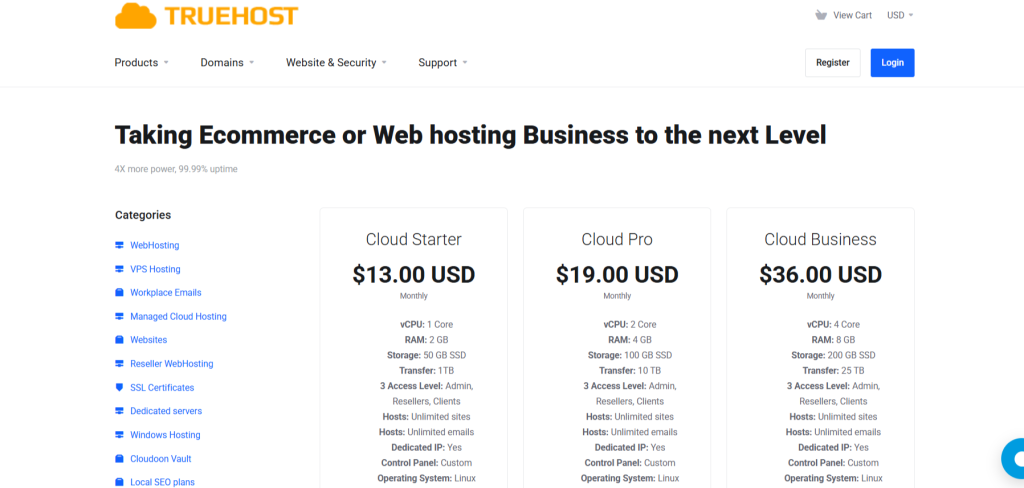
Cloud hosting is a newer, smarter way to keep your website online. Instead of relying on one physical server like traditional web hosting, your site uses a network of connected servers that work together to store data, handle traffic, and keep your site running smoothly. That means if one server slows down or fails, another instantly takes over giving you better uptime and stability.
Mainly, cloud hosting can be either managed and unmanaged. In managed cloud hosting, your hosting provider takes care of all the technical work, including server setup, updates, backups, and security monitoring. That makes it ideal if you don’t have deep technical knowledge or time to manage infrastructure.
On the other hand, unmanaged cloud hosting gives you full control of the server environment. You’re responsible for maintenance, software installation, and troubleshooting which is great for developers or IT teams who want total control.
The good news is Truehost offers managed cloud hosting allowing you to enjoy power and simplicity. In other words, Truehost handles all the behind-the-scenes setup, optimization, and server management, ensuring your website stays fast, secure, and scalable.
Advantages of Cloud Hosting Over Web Hosting
Cloud hosting stands out most due to its scalability. Thus, your website can easily handle sudden increases in traffic without crashing or slowing down. For instance, if you launch a big promotion in Mwanza or get a spike of visitors from Nairobi, the system automatically allocates more server power to keep your site running smoothly without needing manual upgrades.
Another major benefit is reliability. Because cloud hosting uses a network of multiple servers, your website isn’t dependent on a single machine. So, if one server fails, another instantly takes over. This setup minimizes downtime and keeps your site available even during unexpected issues or maintenance.
Cloud hosting also gives you flexible resource allocation, meaning you only pay for what you actually use. This is cost-efficient for growing businesses that experience fluctuating traffic. Additionally, with data centers spread globally, visitors from outside Tanzania, say, in South Africa or Europe can access your site faster through the nearest server, improving loading speed and user experience.
Disadvantages of Cloud Hosting Compared to Web Hosting
While cloud hosting offers impressive flexibility, it also brings a few downsides, mainly cost and complexity. Because cloud plans often charge based on usage, your monthly bill can rise quickly during traffic surges or when resources aren’t managed properly. Thus, unlike fixed web hosting packages, predicting your exact cost can be tricky.
Next, for smaller websites or blogs with consistent, low traffic, cloud hosting can be unnecessary and more expensive than traditional web hosting. In short, if your site doesn’t need high scalability or global reach, you may end up paying for resources you rarely use.
Lastly, technical knowledge can be a barrier. Managing cloud resources effectively requires some understanding of servers and configurations. While managed plans like those from Truehost simplify this, unmanaged cloud hosting can overwhelm you if you lack hands-off experience.
What Is the Difference Between Web Hosting and Cloud Hosting?

Web hosting and cloud hosting both put your website online but they do it in very different ways. So, understanding these differences helps you choose the right option for your business or project.
1) Cost
Traditional web hosting usually comes with a fixed monthly or yearly plan. You pay the same amount regardless of how much traffic your site gets, making it easy to budget especially if you’re running a small business or personal blog website.
In contrast, cloud hosting works on a pay-as-you-go model. You pay for the exact server resources you use. That means your costs can rise if your website suddenly gets more visitors which is only efficient for growing businesses, but less predictable for tight budgets.
2) Performance & Reliability
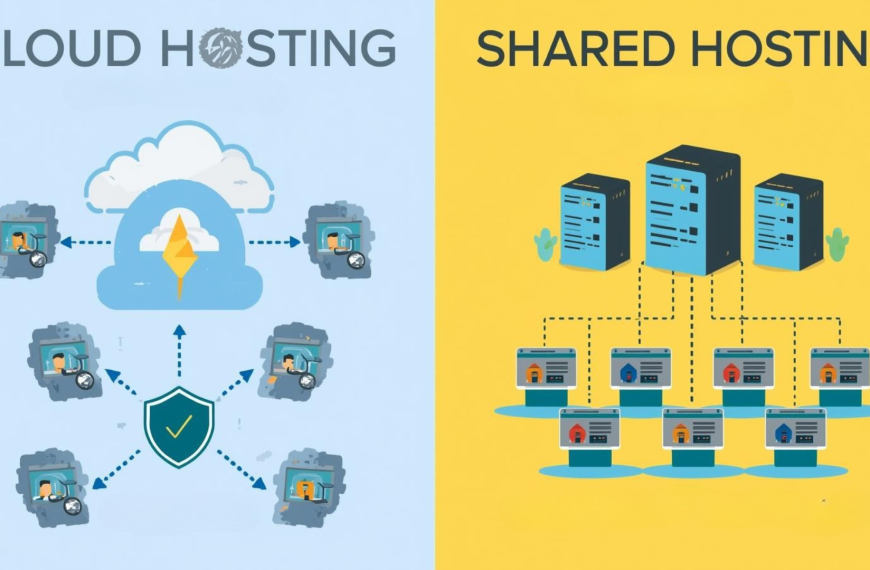
With shared web hosting, your site lives on a single physical server. If that server slows down or another website on it uses too many resources, your site’s performance can drop too.
On the other hand, cloud hosting spreads your website across multiple connected servers such that if one goes down, another instantly picks up the load. This setup delivers higher uptime, faster speeds, and consistent performance even during traffic spikes.
3) Scalability
Scaling with traditional web hosting often means manually upgrading your plan or migrating to a new server. The process can take time and may cause brief downtime while changes are applied.
With cloud hosting, scalability happens automatically. Resources such as CPU, RAM, and bandwidth adjust in real-time to match your traffic needs. This makes it ideal for Tanzanian startups or online stores that experience sudden growth or seasonal traffic increases.
4) Control & Configuration
Most web hosting services offer limited control over your hosting environment. You usually work with preset settings and can’t modify much beyond the basics. This simplicity is perfect for beginners or those who prefer not to deal with technical configurations.
Cloud hosting, on the other hand, offers advanced control. You can customize your server setup, install your own software, and tweak performance settings to suit your needs. However, this flexibility comes with added responsibility that requires you to be tech savvy.
5) Location & Audience Reach
Web hosting typically stores your website on one server, which might be located far from your target audience. For instance, if your provider’s data center is based outside Africa, your Tanzanian visitors could experience slower page loading times.
However, cloud hosting solves this issue through its global network of servers. Your website’s data is served from the server closest to each visitor. So whether your audience is in Dar es Salaam, Nairobi, or even Europe, they enjoy faster, more responsive access to your site.
6) Predictability vs Flexibility
With web hosting, your costs stay the same each month, making budgeting simple and predictable. You always know what you’ll pay, and this stability is appealing for small local businesses or personal projects.
Cloud hosting, however, focuses on flexibility. You get the freedom to scale resources up or down, enjoy quick backups, and manage performance dynamically. The disadvantage is that your monthly bill may vary depending on how much you use.
7) Suitability for Traffic Patterns
Web hosting is best suited for websites with steady, predictable traffic like company pages, portfolio sites, or community blogs. These sites don’t require constant resource adjustments, so a fixed hosting plan works well.
In contrast, cloud hosting is more appropriate for websites that experience fluctuating or unpredictable traffic. For example, if you’re launching an online course, running flash sales, or managing an e-commerce event in Tanzania, cloud hosting can handle sudden traffic spikes without downtime.
Summary Table: Web Hosting vs Cloud Hosting
The table below highlights the key differences between cloud hosting and web hosting at a glance:
| Feature | Web Hosting | Cloud Hosting |
| Cost | Fixed pricing | Pay-as-you-go or usage-based |
| Performance & reliability | May have single point of failure | High availability via multiple servers |
| Scalability | Manual upgrades | Dynamic scaling |
| Control & configuration | Limited customization | Advanced customization |
| Location & latency | Often fixed server location | Global server network |
| Predictability | Stable costs | Variable costs |
| Traffic pattern fit | Best for steady traffic | Ideal for variable or high growth traffic |
Factors to Consider When Choosing Between Cloud Hosting and Web Hosting
Before picking a hosting plan, it’s worth taking a moment to think about what your website truly needs not just today, but in the future. The right choice depends on how your site grows, who visits it, and how much control you want.
Here are the main factors to weigh before making your decision:
- Expected Traffic: Ask yourself if your website will have steady daily visits, or you expect occasional traffic spikes. If you’re running a small business site or blog with consistent visitors, web hosting may be enough. But if you’re planning campaigns or running an online store that could attract large crowds fast, cloud hosting’s scalability will keep your site performing smoothly.
- Technical Knowledge: Web hosting is great if you prefer a plug-and-play setup that just works. Otherwise, cloud hosting can be more complex and requires some technical know-how to configure and monitor.
- Budget: Your budget plays a huge role. Traditional web hosting comes with predictable monthly fees, making it easy to plan your costs. Cloud hosting, on the other hand, charges based on usage which can save money when traffic is low but might cost more during busy months. So, think about what you can afford now and how much flexibility you’ll need as your site grows.
- Growth Plan: If your goal is to keep a small, stable website, traditional hosting works perfectly. But if you’re planning to expand, launch products, or reach international audiences, cloud hosting gives you the flexibility to scale without migration headaches.
- Support and Local Billing: Finally, don’t overlook support and payment convenience. Choosing a provider that offers responsive customer service, accepts Tanzanian shillings, and understands local needs like Truehost can make managing your site much easier and stress-free.
In short, the right hosting model should support not just your website’s current size, but also where you see it in the future. So, think long-term because the right choice today can save you time, money, and frustration tomorrow.
Frequently Asked Questions (FAQs)
1) Is traditional hosting better than cloud hosting?
Traditional hosting can be better if you want predictable costs, simple setup, and steady performance for small to medium websites. However, if your site expects rapid growth, fluctuating traffic, or visitors from multiple countries, cloud hosting is usually the better choice because it offers scalability, faster performance, and higher uptime.
3) Is cloud hosting more expensive than web hosting?
Cloud hosting can be more expensive than web hosting, but it depends on your usage. With cloud hosting, you pay for the exact resources you use making it cost-efficient for growing sites. In contrast, web hosting has fixed pricing, which is easier to budget but less flexible when your traffic increases.
4) Can I switch from web hosting to cloud hosting later?
Yes. Most hosting providers, including Truehost, allow you to upgrade from traditional web hosting to cloud hosting without losing your files or data. Migration is simple and ensures your site can scale smoothly as it grows.
Final Thoughts
Choosing between web hosting and cloud hosting isn’t about which one is better but about which one fits your stage and goals. If your website is small, stable, and budget-sensitive, web hosting offers everything you need with minimal setup. But if you expect your audience to grow beyond Tanzania or experience traffic spikes, cloud hosting gives you the speed, reliability, and flexibility to keep up.
You can think of web hosting as a solid house with fixed rooms perfect when your needs are steady. Cloud hosting, on the other hand, is more like a smart home that expands when you need extra space and shrinks when you don’t.
At the end of the day, the best choice is one that grows with you. With Truehost, you get both options, which are affordable web hosting for starters and managed cloud hosting for scaling businesses.